Skip to the story

Free shipping in India

The House / Chapter 01

A sense of place

Before it is perfume,it is possibility.

A petal. A piece of heartwood. A thread of saffron. Meet the materials and scent traditions that inspire our small Indian perfume house — and discover how a perfumer turns them into something you can wear.

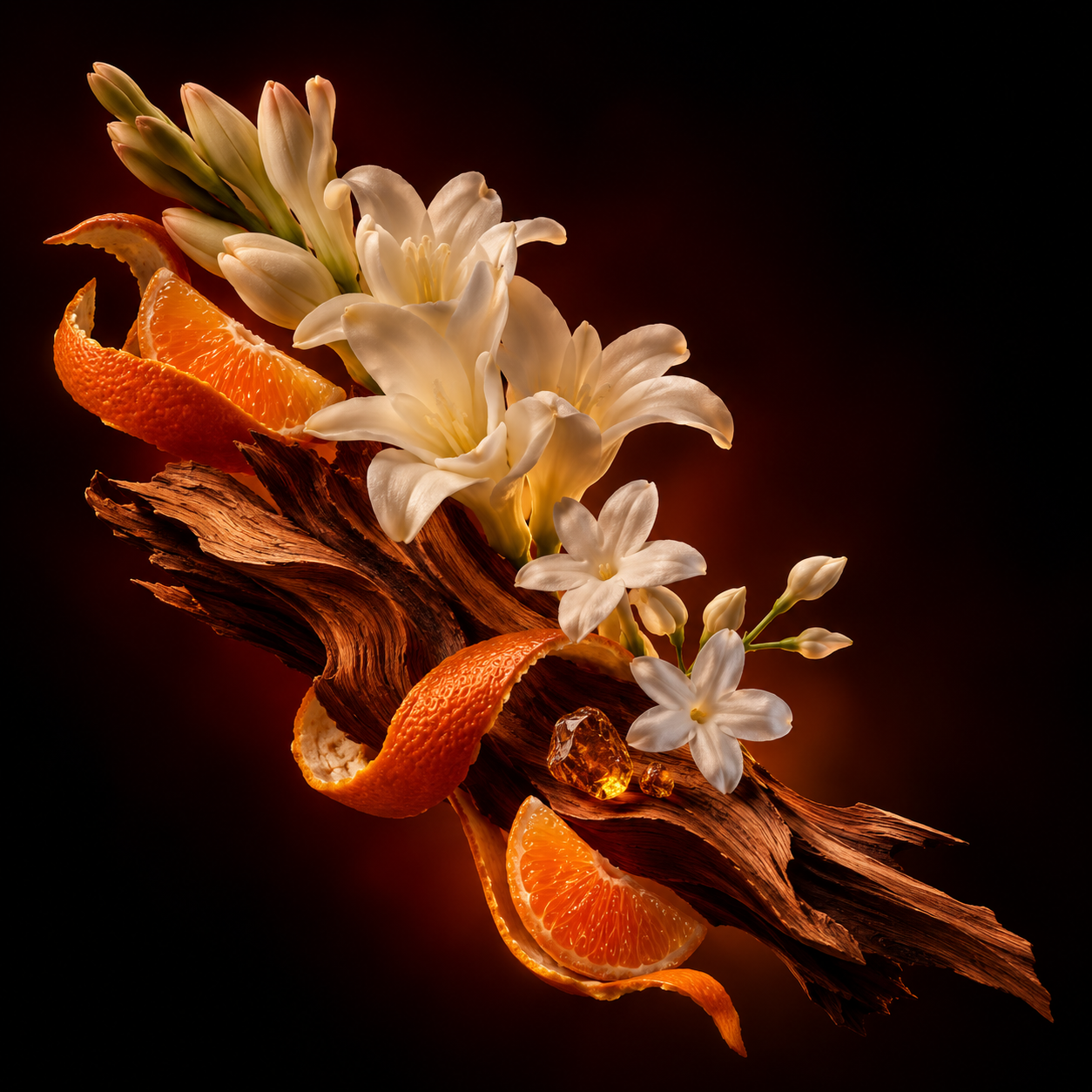
Olfactory illustration of white flowers, citrus peel, wood and amber-coloured resin
An olfactory still life · an illustration of the perfumer’s palette

An independent Indian house

A considered composition

A personal finishing touch

01 / The places behind the palette

Rooted in place.
Remembered in scent.

Explore three of the house’s ingredient stories. Each place offers a different way into fragrance. Select a material to discover its character.

Kannauj · Uttar Pradesh

Petal-soft. Luminous. Deeply floral.

Kannauj sits at the heart of India’s attar tradition. The house’s rose story begins here, with the language of copper deg-bhapka distillation: botanical material, water, heat, and the patient collection of aromatic vapour.

In a composition, a rose impression can feel fresh and airy, richly honeyed, or almost spicy. The surrounding materials decide which side comes forward.

01 / A closer look

From raw material to a fragrant palette.

Different materials ask for different techniques. These are three ways perfumers capture or create a scent before a formula is blended.

01

Distillation

Water or steam helps carry volatile aromatic compounds from a botanical. The vapour is cooled back into liquid, allowing fragrant oil to be collected. The method is chosen to suit the material.

02

Extraction

Some delicate materials need another approach. Solvent extraction can produce a fragrant concrete and then an absolute; other methods include expression and carbon dioxide extraction.

03

Composition

Perfumers also work with aroma molecules. Together with botanical extracts, they expand the palette: bringing clarity, texture, diffusion, or an impression that cannot simply be distilled from a flower.

Explore the craft: IFF — how perfume is made ↗ · Fragonard — the techniques of perfumery ↗

The experience / On your skin

The first spray is
only the beginning.

Give a fragrance time to introduce itself. Its bright opening softens into a fuller heart, then settles into a quieter trail. These layers overlap, creating the perfume’s changing character.

Skin, weather, application, and the formula all influence the experience. There is no universal clock for a perfume’s development.

Discover it for yourself

Top

The first impression

Heart

The unfolding character

Base

The lingering memory

An olfactory structure, not a fixed wear-time promise.

Good questions deserve clear answers

A little more
to know.

Something specific on your mind? Tell us the perfume you are considering, and what you would like to understand.

Write to the house ↗
Is a perfume note the same as an ingredient?

Not necessarily. A note describes what you perceive; it may come from one material or an accord of several. A rose note, for example, does not by itself tell you which rose extract or aroma molecules a formula contains. Use the product’s ingredient information for composition and allergen questions.

Does every perfume contain these materials?

No. These stories introduce the house’s olfactory palette, not a formula shared by every bottle. Each fragrance has its own composition. Check its product description and the ingredient list on the packaging, and contact us if you need specific material or origin information.

Are natural ingredients always gentler?

Natural origin does not guarantee that an ingredient will suit every person. Both botanical extracts and manufactured fragrance ingredients can cause sensitivities. The finished formula, concentration, intended use, and your own sensitivities matter.

The next part is personal

Now, find the fragrance
that feels like you.

Take your time with the collection. Explore the notes, follow your curiosity, and let the scent tell you the rest.